



A Latin Apprenticeship Program
Tirocinium Latinum is crafted to help parents, teachers, or students who want to learn Latin by building the required skills to think, read, and communicate in Latin. While this program aims to read Latin texts, language skills contribute to another goal of enlarging the soul. Through a language such as Latin, we gain a greater vision of humanitas, a common vision of what it means to be human. This perennial question weaves its way through western literature explored within the linguistic cultures of Greek and Latin. Thus, learning Latin nourishes the soul enabling us to partake in the great conversation that has continued for more than two millennia.
Some exposure to the language will certainly be beneficial, but it is not necessary. The first lesson at the first retreat always begins with “Roma in Italia est.”
How does the course work?
Led by Buck Holler, the Tirocinium is a three-year program that teaches apprentices the Latin language to build fluency in reading and comprehension of the Latin authors and to build confidence for teaching in the classroom or at home. Each year apprentices meet on site in Loudon, TN for a week long retreat in July and again in February. The rest of the program is fulfilled from home through weekly webinars that read the assigned chapters, discuss grammar, vocabulary, and comprehension, and practice new material through various exercises.
Now Accepting Applications!
Fall Application Cycle: Aug 31 – Dec 1
Spring Application Cycle: Jan 1 – Apr 15
Space is limited.
Applications received by the deadlines will be considered in the first round of seating. Applications will continue to be considered monthly as seating allows.
HOW MUCH DOES IT COST?
The Latin Apprenticeship costs $3457/year in tuition, with a $400 administration deposit upon acceptance or April 1st for returning apprentices. There is a non-refundable $75 application fee to apply for the Latin Apprenticeship. In addition to the tuition and deposit, apprentices should expect to pay for travel, lodging, and food for the two retreats. A general estimated cost for each retreat is $500 plus airfare if applicable. Including all fees and expenses, the estimated cost for one year in the Latin Apprenticeship is $4447.
Retreat Dates 2025-26
Summer: July 28 – Aug 2, 2025
Winter: Feb 16 – 20, 2026
Webinar Schedule 2025-26 (all times are EDT)
- First Year: Wednesdays, 4:30-5:30pm EDT
- Second Year: Mondays, 4-5pm EDT
- Third Year: Wednesdays, 5-6pm EDT
Retreat Dates 2026-27
Summer: July 6 – 10
Winter: February 15 – 19
Webinar Schedule 2026-27 (all times are EDT)
Mondays, 4-5pm EDT
Do you have questions about the Latin Apprenticeship? Click here to join!
- Monday, May 5 Office Hour with Buck Holler 4:00-5:00pm ET – Latin
- Monday, June 2 Office Hour with Buck Holler 4:00-5:00pm ET – Latin

Program during the retreats
| 8:00am | Ientaculum | coffee, tea, fruit, eggs, toast, bacon |
| 8:30am – 12:30pm | Lectiones | First hour: lesson from Roman poets Following: lessons from Familia Romana |
| 1:00pm | Prandium | High Country Culinaire |
| 2:00 – 5:00pm | Exercitia | afternoon session reserved for study and tutoring; working through the exercises |
| 5:00 – 6:00pm | Ars docendi | elective module reserved for sessions on language acquisition |
| 6:00pm | Cena | High Country Culinaire |
| 8:00 – 9:00pm | Ludi et Carmina | Time set aside for skits, games, and songs |
Webinars
Apprentices meet online once a week with the head mentor or assistant head mentor for a one-hour session. These webinars extend from August to May and move at a pace of about one chapter a month.
Modules
A variety of modules are taught during the retreats.
1. Morning sessions begin with a Latin poet. During this first hour, apprentices work through an original and unaltered poem by such poets as Catullus, Horace, Ovid, Virgil, and others. Following this, apprentices study select chapters from the book Lingua Latina Per Se Illustrate by Hans Ørberg. First year apprentices study the lessons under the magister. Second year apprentices help the magister teach some of the chapters. Third year apprentices teach selected chapters independently.
2 . The first afternoon session sets aside time for independent or guided study through the exercises associated with the chapters taught during the morning sessions. Second and third year apprentices will have already completed these exercises, and can therefore serve as mentors helping first year apprentices during this time and studying later chapters with the head mentor.
3. The second afternoon session offers discussions on the art of teaching and language acquisition.
4. Evenings are free and often serve as times for games, stories, fellowship, and singing Latin songs.
TEXTBOOKS:
• Lingua Latina Per Se Illustrate, Pars I: Familia Romana
• Lingua Latina Pars II: Roma Aeterna
• Colloquia Personarum
• Fabulae Syrae
• Exercitia Latina I
• Exercitia Latina II
• Latine Disco
HOW MUCH DOES IT COST?
The Latin Apprenticeship costs $3457/year in tuition, with a $400 administration deposit upon acceptance or April 1st for returning apprentices. There is a non-refundable $75 application fee to apply for the Latin Apprenticeship. In addition to the tuition and deposit, apprentices should expect to pay for travel, lodging, and food for the two retreats. A general estimated cost for each retreat is $500 plus airfare if applicable. Including all fees and expenses, the estimated cost for one year in the Latin Apprenticeship is $4447.
Now Accepting Applications!
Fall Application Cycle: Aug 31 – Dec 1
Spring Application Cycle: Jan 1 – Apr 15
Space is limited.
Applications received by the deadlines will be considered in the first round of seating. Applications will continue to be considered monthly as seating allows.


Head Mentors
Buck Holler is a former horse trainer and rodeo cowboy from Red Bluff, CA. Retiring from the rodeo circuit, Buck headed to New England to study theology and languages at Gordon-Conwell Theological Seminary in 2001. Since then he has worked as an educator and administrator in CA, New York City, and eastern NC. Buck first joined The CiRCE Institute as an apprentice in 2007, became a head mentor for the East Coast III apprenticeship in 2017, began the Latin Apprenticeship in 2019, and now serves in Concord, NC as CiRCE’s director of consulting.
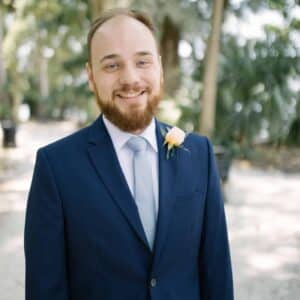
Levi Gulliver is Headmaster of King Alfred Classical School in Orlando, Florida, where he was born, raised, and now lives with his beautiful wife Alicia. Soon after he began teaching (mostly Latin), Levi was blessed to complete the Circe Institute Teaching Apprenticeship in 2018 and the Tirocinium Latinum in 2022. He loves his wife, his church, his school, and walking in the Central Florida winter.
"Buck has been a wonderful role model in this journey. While he has the role of head mentor and has years of wisdom to draw on in guiding those of us who are new to the journey, our interactions with him have been surprisingly comfortable. He presents himself as having as much of a need to learn as his apprentices."
Nena H