“The CiRCE Apprenticeship has been a deeply formative experience . . . I have grown in my ability as a teacher and am learning how to truly love my students.”
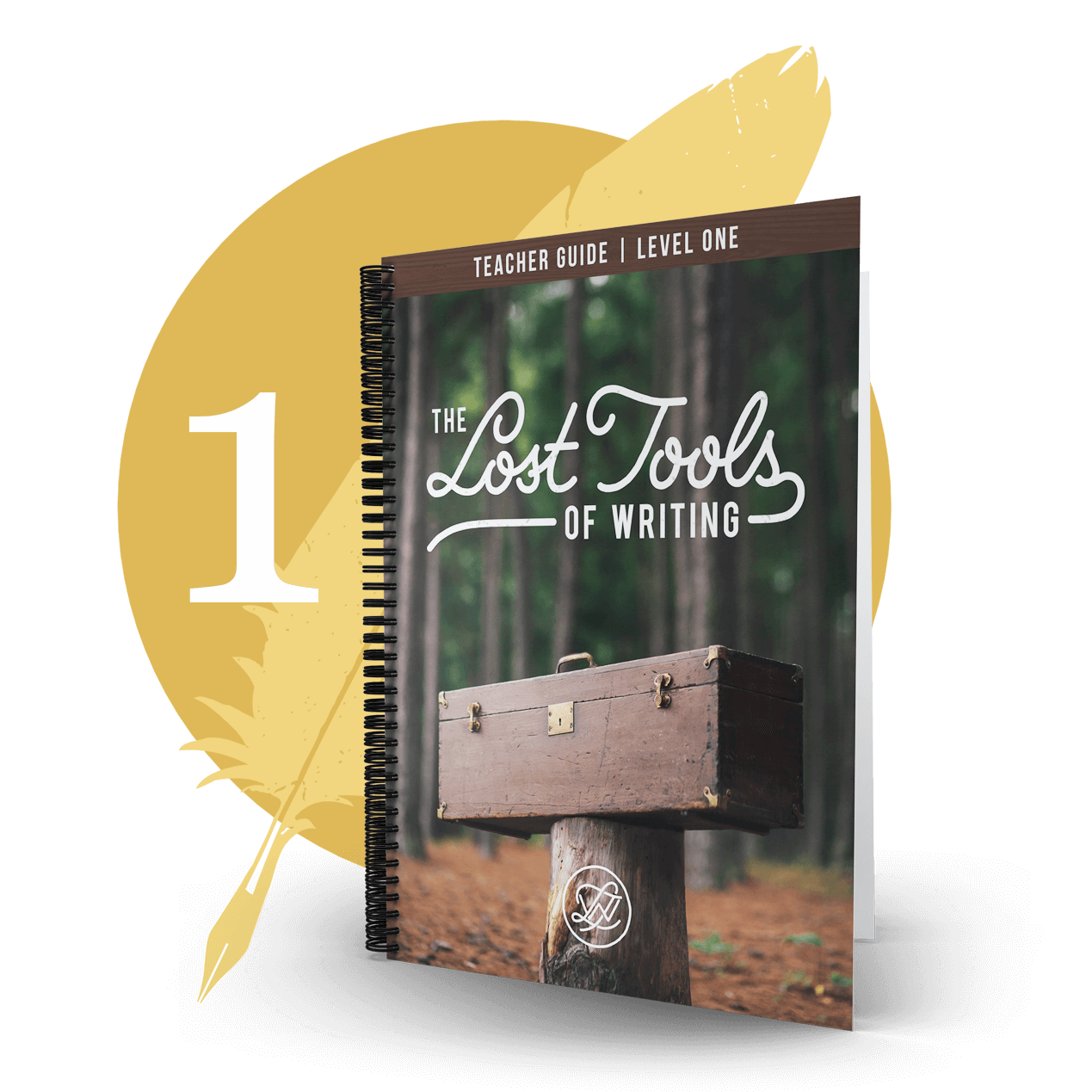
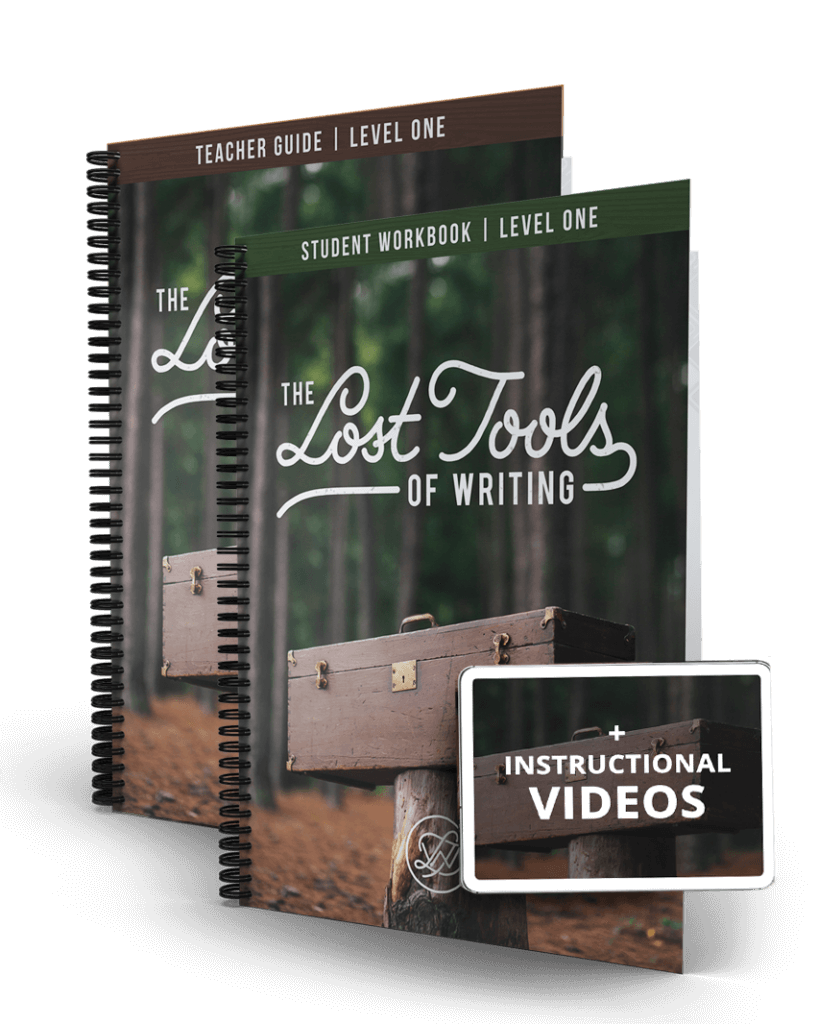
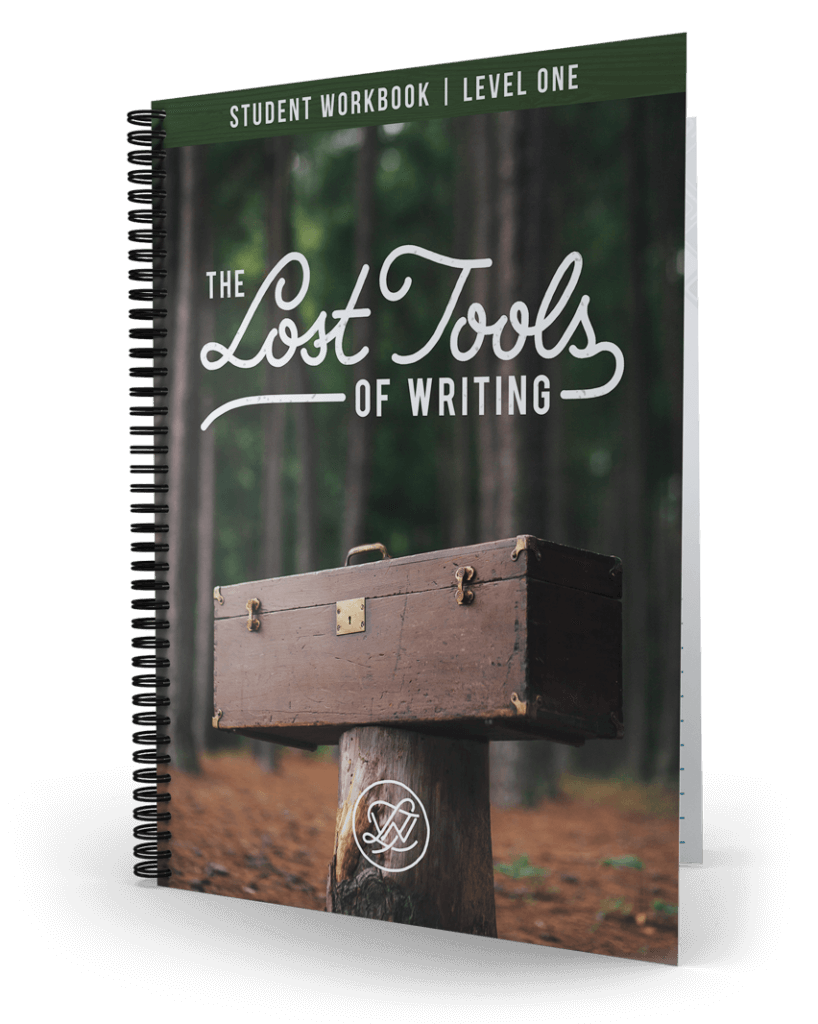
Currently offering three levels, The Lost Tools of Writing trains students in the classical art of rhetoric. Ideal for students in seventh through tenth grade, this course teaches the proper form of persuasive writing while challenging the student to grow in discernment. Level I asks the student to decide whether an action was correct, level two asks them to consider consequences for actions done in the past, and level three asks them to use their practiced discernment to consider what a community ought to do in the future. After just one year, students will have learned and practiced foundational skills of thought and expression that will serve them in all areas of life and school.
THINKING: Material Logic: Common Topics • Definition • Comparison • Circumstance • Testimony • Relationship • Formal Logic: Sorting
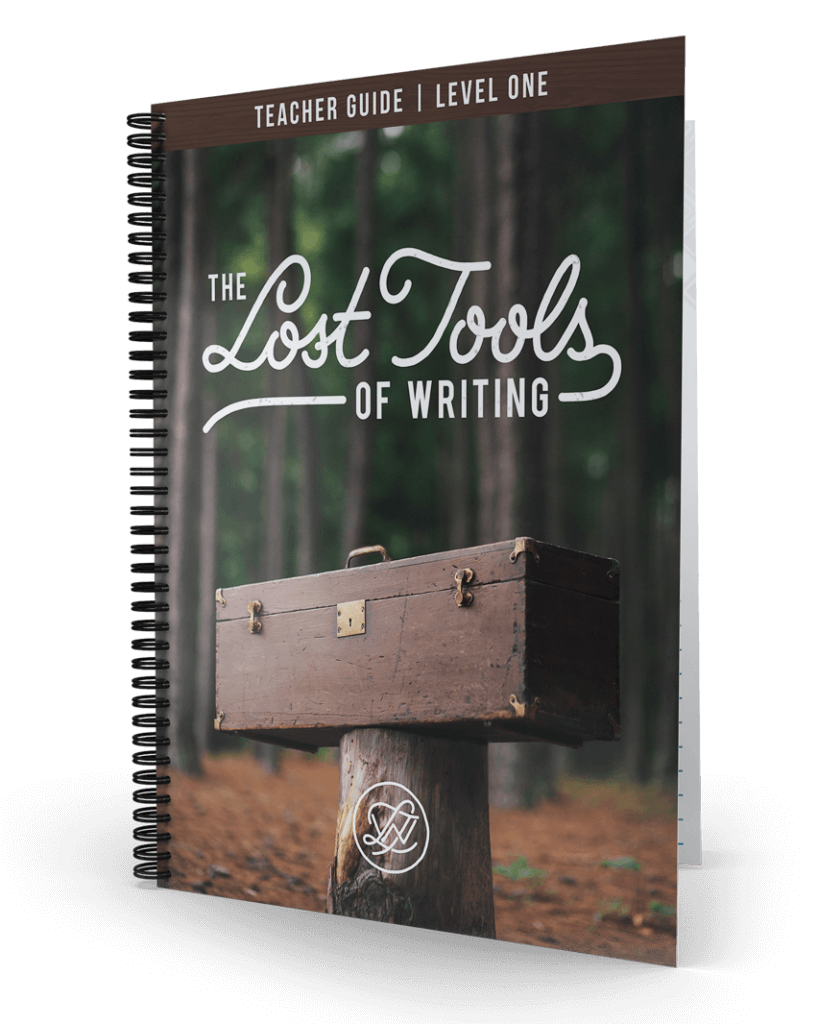
Lost Tools of Writing Level 1
Recommended for Age 12+
The Lost Tools of Writing, Level I is a one or two-year program (depending on the age of the student and the pace at which you wish to go), that covers primarily the persuasive essay.
To learn more about why we focus on the persuasive essay click here.
Featuring eight essays and a review lesson, LTW I teaches a half dozen schemes and tropes as well as numerous skills and techniques for coming up with ideas.
WRITING: Additional schemes & Tropes • Compound & Complex Sentences • Further Amplification • New Exordia
THINKING: Material Logic: Special Topics: Justice • An Sit • Quid Sit • Quale Sit
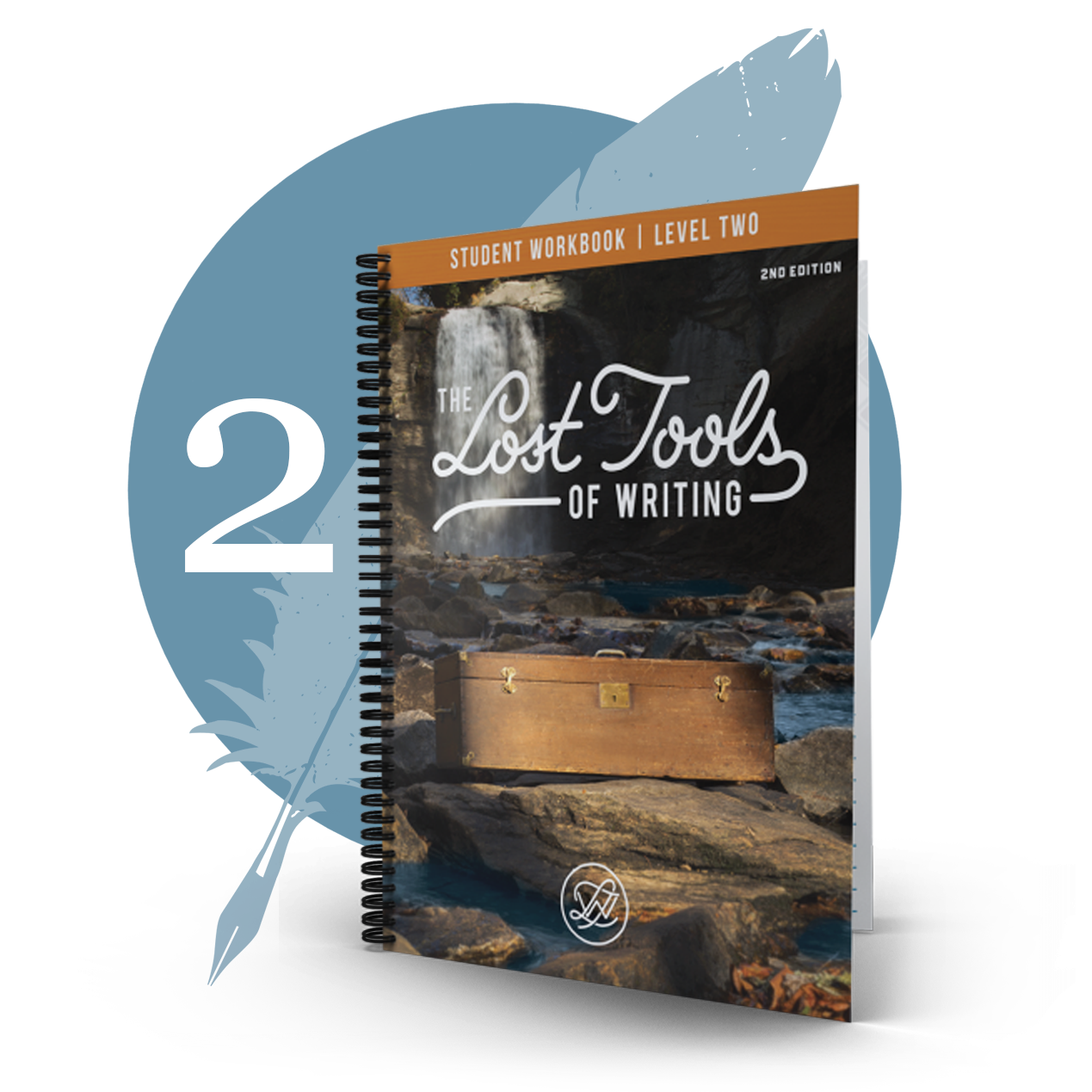
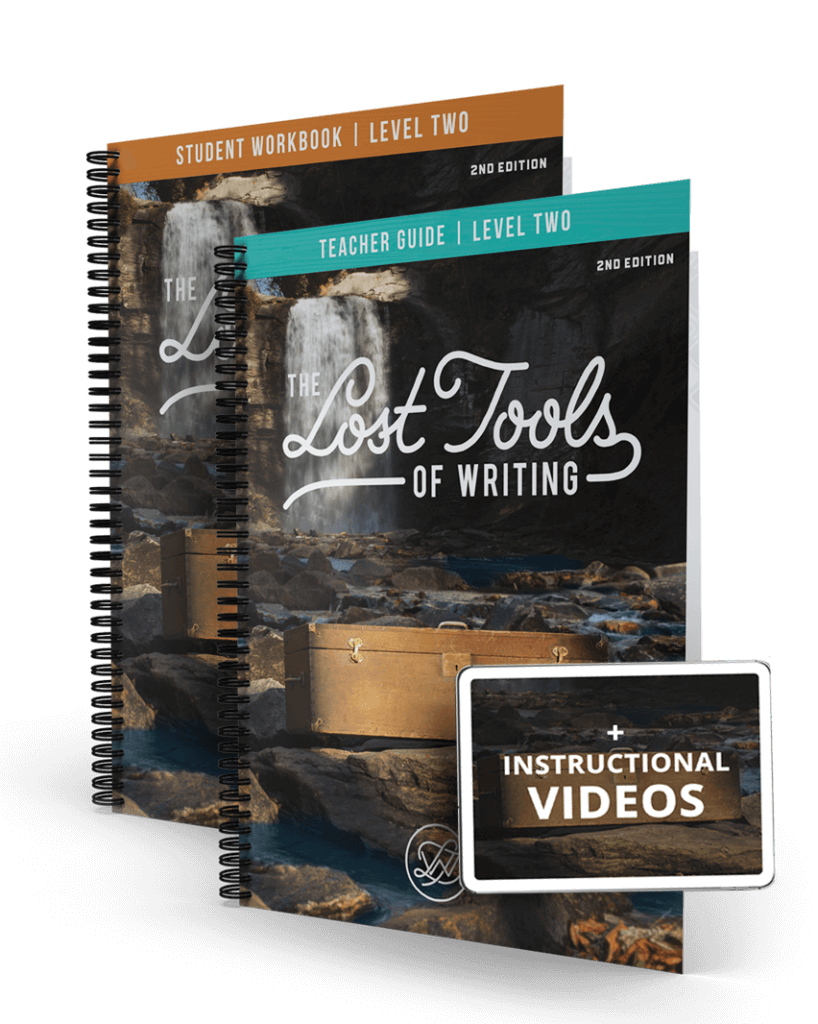
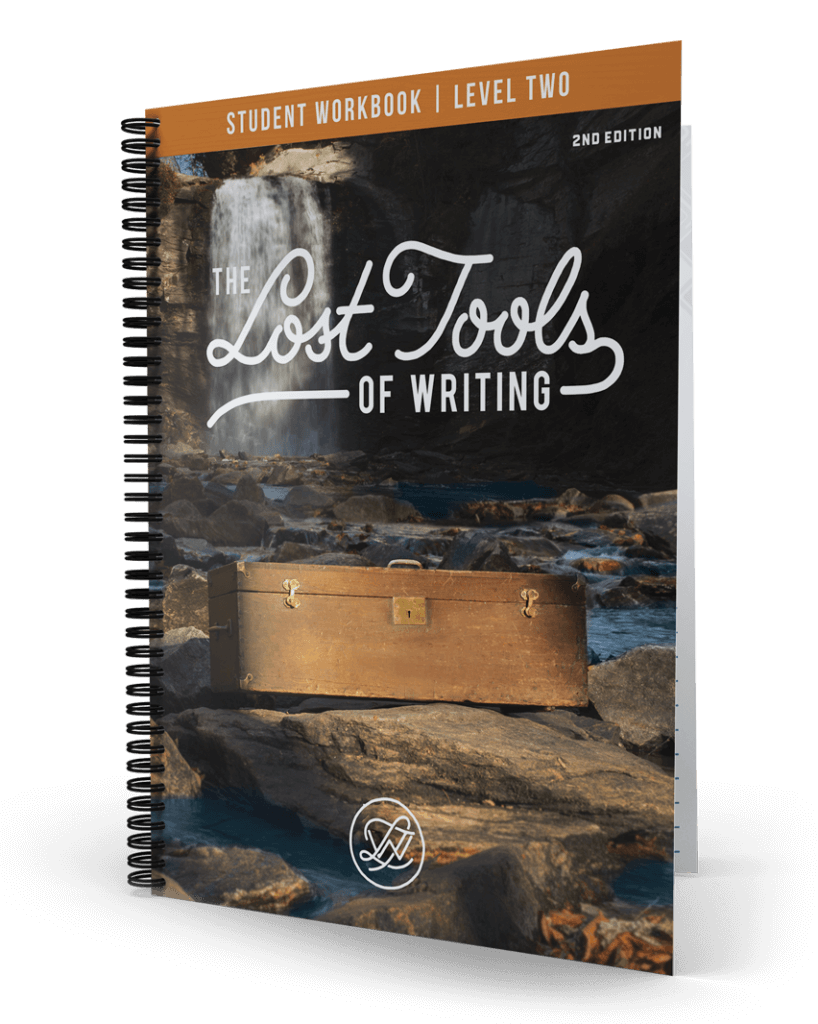
Lost Tools of Writing Level 2
Recommended for anyone who has completed Level I.
In LTW II, you will continue your study of classical rhetoric by studying the judicial address, which refines the persuasive essay taught in LTW I. So just as the elements of LTW I build upon one another, so LTW II builds upon LTW I.
Through the eight lessons/addresses in LTW II, your students will work within the framework of the three canons, but each will be aimed at this new kind of address. This familiarity will empower you as a teacher and will provide confidence for your students.
Recommended for anyone who has completed Level II.
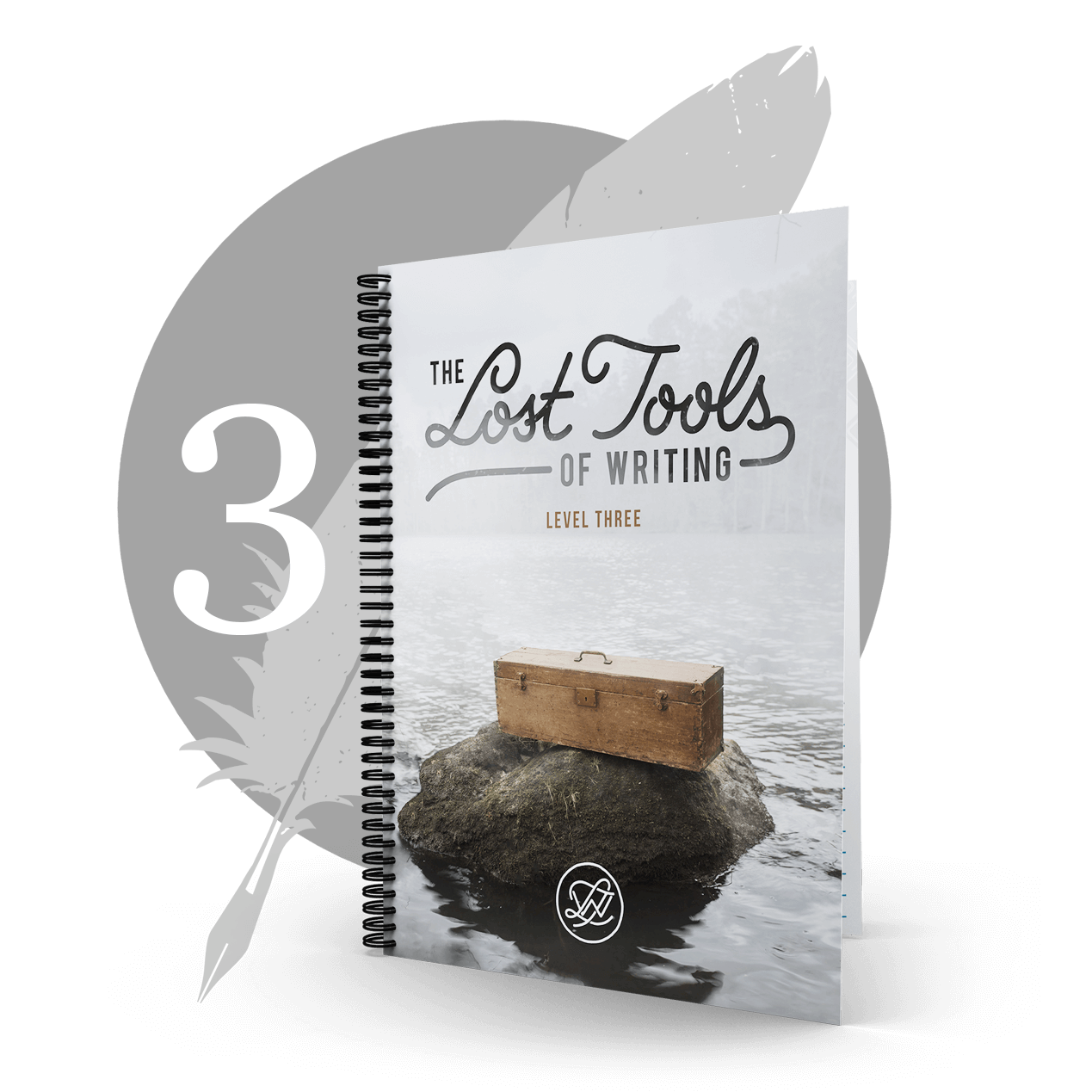
The next stage on your journey to mastery of thought and communication is Level III, where you’ll solidify the foundations that you laid in LTW I and II, develop advanced writing skills, master additional forms of persuasive address, and even begin to practice tools you’ll use for the arts of verse and storytelling.
The heart of Level III is the deliberative address, the immediate purpose of which is to determine whether an action should be taken. The bigger purpose is to grow in wisdom and prudence by practicing making difficult decisions from which you can learn principles and habits of decision making for your own life and community.
When you write your deliberative address, you practice thinking imaginatively and strategically.
Through the eight lessons/addresses in LTW II, your students will work within the framework of the three canons, but each will be aimed at this new kind of address. This familiarity will empower you as a teacher and will provide confidence for your students.
WRITING: In Arrangement: new instruction for Narratio, plus thesis, proofs, exordium, amplification. In Elocution: metaphor, advanced metaphor, and extended metaphor
THINKING: Material logic: the topic of comparison in greater depth
Comparison Essays
Recommended for anyone who has completed Level I.
This semester-long program provides a way for students to gain more practice in foundational thinking skills plus practice in writing a different kind of essay. Through LTW: Comparison Essay, students will solidify the foundations laid in LTW I, develop deeper thinking skills, master an additional form of essay-writing, and delve more deeply into analogical thinking with different kinds of metaphor-writing.
The skills students gain through LTW: Comparison Essay extend beyond academics to life in the world, cultivating more refined and careful thinking about people, things, ideas, and their own decisions.
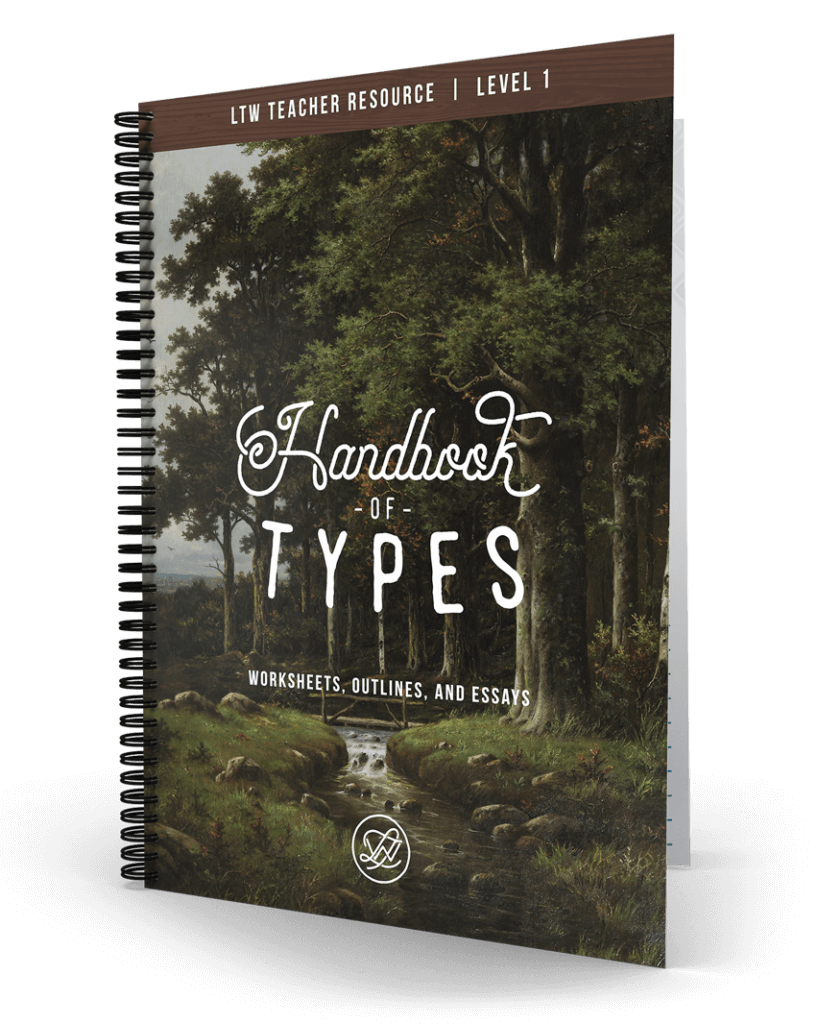
Offering dozens of additional examples of the content taught in The Lost Tools of Writing Level I, this handbook enables deeper understanding and richer contemplation of the three canons of classical rhetoric. Whether you are looking to enrich your own teaching or to empower your students, this book will help you take The Lost Tools of Writing to the next level in your classroom or homeschool.
Using three different stories, the Handbook of Types provides:
• Three types for every invention worksheet • Three types for every arrangement worksheet • Three student examples of every outline • Examples from the stories for every scheme and trope • Three examples for every elocution worksheet • Three examples for every essay
My daughter has struggled with writing her whole life. YEARS of struggle for mother and child. She wrote two essays today, one by choice. I have never seen her put that many words on paper at once before. And never, ever, ever did I think I would see the day she would choose to write an essay over making a list! It feels like a miracle. LTW has my undying affection!”
Need Help? We're at Your Service.
Contact
Instructional Videos
User Group
Online Classes
Host A Workshop
Watch a Workshop
Watch the Introductory Lesson Video
Check out our Three Amigos series all about the Lost Tools of Writing!
The Three Amigos is our series hosted by Andrea Lipinski, Camille Hunt, and April Langan where they try to answer all of your doubts, inquiries, and questions about the Lost Tools of Writing. The Three Amigos will release Thursdays on our YouTube Channel!
FORMA contemplates ancient ideas for contemporary people. We are a community of classical educators and thinkers who seek to better understand the classical tradition and enact it in a contemporary context.
We are now inviting submissions in the following areas: book reviews, papers, poetry, and opinion pieces.
Our upcoming winter edition will explore the topic of “What is History“. Submissions should relate, either directly or indirectly, to this theme; the author may determine his or her own interpretation and use of the theme.
Please submit your article and a short bio to formamag@circeinstitute.org. Please specify whether you are submitting to the FORMA Symposium (which automatically counts as submission to the Journal) or just the FORMA Journal. Submissions are due by October 31st. By submitting, you are agreeing to allow CiRCE exclusive publication rights to accepted works. Authors maintain the copyright to their own work.
FORMA contemplates ancient ideas for contemporary people. We are a community of classical educators and thinkers who seek to better understand the Great Books and their influence on contemporary literature and the arts.
The FORMA Review, now open for submissions, seeks to shed light on classic texts. Unlike most journals, we review not only the newest books but the most influential books. Today, many of the Great Books have been sidelined, forgotten, or passed over for more “relevant” texts. We hope to return the classic works of the past to the forefront by sharing new reviews of old books.
We also believe excellence and beauty incite imitation, so we look for the influence of the Classics on modern texts and invite reviews of contemporary works that note this influence on both form and content.
While the content of these book reviews may seem unexpected, the form does not; submitted book reviews should follow the standard form of the book review: summarizing the existing conversation on the topic, noting how the book enters into that conversation, analyzing the content, and assessing the success of the author (summary should only be done to the extent that it enables these four). Submissions should be between 1,000-2,000 words.
Please submit your review and a short bio to formamag@circeinstitute.org. There is no deadline for submission. By submitting, you are agreeing to allow CiRCE exclusive publication rights to accepted works. Authors maintain the copyright to their own work.
CiRCE Online admits students of any race, color, national, or ethnic origin to all the rights, privileges, programs, and activities generally accorded or made available to students through CiRCE Online. It does not discriminate on those bases in the administration of its programs, and admissions policies.
Grievance Policy
Complaints, concerns, and other problems should be handled in the following order:
1. Begin with the source of the grievance. This generally means speaking directly with the tutor, or if the grievance is with another student, then you should contact the other parent.
2. If the grievance is not resolved, then you should contact the Headmistress.
When addressing a tutor concerning a grievance, proceed in the following manner:
Respect the tutor’s responsibility to other families.
Understand that tutors will have information that the parents are not privy to.
Be concrete and specific.
Do not ask tutors to understand or act on your feelings as a parent.
Do not spread rumors or criticisms behind a tutor’s back, or post inflammatory statements online (e.g., Facebook, Twitter, etc.).
Address the tutor respectfully and in a professional manner.
Failing to abide by these general guidelines may result in student dismissal.
Age & Admission Requirements for Courses
Unless given specific permission from the Headmistress, all students must meet the minimum age requirement for registration upon entering CiRCE Online classes.
Admission to the Lost Tools of Writing Level II course will be by permission or invitation from the Headmistress or tutor, and is only open to students who have completed Lost Tools of Writing Level I.
Admission to the Lost Tools of Writing Level III course will be by permission or invitation from the Headmistress or tutor and is only open to students who have completed Lost Tools of Writing Levels I and II.
Students may be asked to submit a writing sample prior to admission.
Note on Age & The Lost Tools of Writing
The Lost Tools of Writing (LTW) is a writing curriculum that teaches, in Level I, the first three canons of classical rhetoric – invention, arrangement, and elocution. It teaches students how to think of something to say, how to organize their thoughts, and how to express those thoughts in a clear and appropriate way.
The first part of this writing process teaches students to think of something to say. In that process it teaches them to think, in general. This thinking process requires students to have matured to the point where they have developed abstract thinking skills.
We have found with distance learning that younger students sometimes have greater difficulty than they would in a regular classroom. To account for that, we require that a parent attend the first class of the year with their child to see what the expectations are for the student and learn, with their student, how the technology works.
Communication
Given the “virtual” platform of CiRCE Online, the importance of communication cannot be overstated. Following these procedures will help eliminate miscommunication and confusion:
Visit the class website daily for any news updates.
Check your e-mail daily to receive the steady stream of feedback. This enables you to stay caught up with correction and course work.
Written homework assignments are posted weekly and students are expected to read them and follow directions. Students also need to read all forum posts (received via e-mail).
Please be prompt with replies to your tutor(s).
Remember that CiRCE tutors are available through e-mail and, if needed, by phone. They will willingly and patiently answer any and all questions from students and from parents.
Grievances should be addressed with the person towards whom the grievance is directed (see “Grievance Policy” above).
Gossip and slander are strictly forbidden by both Scripture and CiRCE policy (see “Grievance Policy” above).
Time Required
Most courses require 60 − 90 minutes of class time once a week unless you take a course that meets twice a week. Time requirements to complete course work outside of class will vary based on the tutor, the course, and the ability of the student. A general rule of thumb is to assume 3 hours of work for every hour of class. Each week, after a student completes his initial work of 1-2 hours of homework, he will need to spend about 15 minutes a day checking his e- mail (or the website) to find comments/feedback on his work and correcting his initial homework submission.
Tutoring Fees
Should a student require assistance from a tutor, beyond normal instruction, class time, and feedback, it may be deemed necessary to establish tutoring sessions. If the parent(s) of the student and the tutor agree to such sessions, the tutor should be paid $35 per half-hour session. These tutoring fees are not included in student tuition.
Assignments
All assignments are to be completed by students in the time frame given by the teacher. Students are responsible for knowing the course work requirements a teacher may administer for any given class, and to accept the consequences for not meeting those requirements. The teacher retains the right to reject assignments that are not submitted by the given deadline.
Attendance and Absences
General Requirements Regarding Attendance Regular attendance in the online classroom is necessary for a student’s progress. Each new class period builds on the previous class, making it important to attend every class offered during the term. Irregular attendance prevents students from learning the ideas and concepts taught in a course.
Tardiness
Students are considered tardy when arriving to class late or are unprepared. Please be punctual. Tardiness can be a hindrance to learning and a disruption to the class. Penalties for tardiness are determined by the teacher.
Absences and Make-up Work
Attendance is marked as either “present” or “absent.” Your child’s absence will not be marked “excused” or “unexcused.”
In the event of unintended absences due to illness or unforeseen circumstances, the student must contact the tutor to collect notes and assignments from the missed class. It is the student’s responsibility to gather this material and make-up any missed work.
Parents, if you know that your child will miss a class due to recreational travel or other events that conflict with class time, please notify the tutor 2 weeks in advance. Assignments will be due when the student returns to class, unless otherwise directed by the teacher.
Class Withdrawal
Any student wishing to withdraw from a course must do so by notifying the teacher first (if the class has already begun meeting), and then notifying the Headmistress. Please take note of the “Refund Policy.” Failing to attend a class is different from withdrawing from a class and may result in the forfeiture of any refund.
Late Work
Students are hurt when they fall behind. The teacher cannot complete the student’s work, understand for him, or force him to complete assignments. Tutors will, however, send encouraging reminders to students, notifying parents if the student does not respond. If neither
responds to these repeated communications, and the student becomes two weeks behind in his work (for reasons not due to family emergency), we reserve the right to change his status to “Audit” or take other measures, such as no longer assessing the student’s work, requiring tutoring fees for the student, or removing the student from the course.
Textbooks
CiRCE Online does not provide textbooks for any class. It is the student’s responsibility to view the course syllabus and purchase the required texts.
Homework
Homework is assigned to (1) apply the ideas taught in a class and (2) prepare for the next class meeting.
Homework may be assigned by a teacher at his or her discretion. It is important that students complete the work in a timely manner and according to the parameters given by the teacher. All homework is to be done by the student.
Assessment Policy Principles & Form The purpose of assessment is to motivate diligent effort to achieve known objectives. Assessment must be objective, clear, known, and fitting.
In every course, the teacher will assess content (or tradition), ideas (or truths), and skills (or virtues).
Procedure
Teachers assess informally and formally. At the end of each term, students receive an evaluation that outlines progress within a course. Teachers shall provide timely feedback on all student work for a course.
Evaluations
Evaluations are issued to the parents at the end of the term. The evaluation indicates whether the student has displayed mastery or needs to repeat the course. Evaluations provide a snapshot that outlines what knowledge, skills, and understanding a student has attained during the course.
Tests and Exams
Tests and exams serve to appropriately assess the student’s understanding of the ideas and concepts taught in a course. Therefore, cheating and plagiarism are strictly forbidden by CiRCE Online. Students are not permitted to communicate with other students during a test or exam, or to submit work that is not their own. Any violation of this policy may result in removal from CiRCE Online.
Honor Code
We believe in the pursuit of wisdom and virtue, and maintain the standards of respect, order, unity, diligence, and honesty as our commitment to personal excellence.
All staff, faculty, and students of CiRCE Online will commit to pursuing excellence (Phil. 4:8). In addition, all members of CiRCE Online will comply with the honor code: respect, order, unity, diligence, and honesty.
Financial Information
All students must enroll through the online registration process. A confirmation email with this welcome information will be included with payment confirmation of the registration fee. A welcome packet of information will be available to follow instructions to pay any yearlong tuition through FACTS Management. Registration/application, and tuition information is available on the CiRCE website, and is subject to change without prior notice.
Payment Delinquency
CiRCE Online expects parents to fulfill their payment obligations in the time frames allotted. Failure to make full payment will forfeit the student’s seat or access to the class. The seat will remain closed to your child until a full payment has been received.
Refund Policy
If you decide to drop a class, tuition will be refunded according to the following schedules: Before July 31st: 100% of tuition paid Before the end of the second week of class: 75% of tuition paid After the end of the second week of class: No Refunds
The full tuition for the term is due according to the schedule set up in your FACTS account. CiRCE is contracted with instructors for the duration of the courses.
Note: All withdrawals are final.
Please note: these policies are subject to change without prior notice. Registration fees are non- refundable.