


For Graduates of the Apprenticeship
Summer Retreat: August 10-14, 2026
Winter Retreat: Feb 15-19, 2027
Where: Kannapolis, NC
Head Mentor: Andrew Kern
Now Accepting Applications!
Fall Application Cycle: Aug 31 – Dec 1
Spring Application Cycle: Jan 1 – Apr 15
Space is limited.
Applications received by the deadlines will be considered in the first round of seating. Applications will continue to be considered monthly as seating allows.
Are you interested in curriculum development? Would you like to develop and contribute curriculum to the Christian classical education renewal? In The CiRCE Institute’s newest apprenticeship program, we will be offering training to graduates of the Master Teacher Apprenticeship program to help Master Teachers learn how to develop their own curriculum.
Do you have questions about the Curriculum Development Apprenticeship? Click here to view available times!
The program will offer training in three phases, following the traditional canons: Invention, Arrangement, and Elocution.
Invention: Training will begin with Invention. Apprentices will learn what sources to turn to draw from the tradition in the particular art or science their curriculum is geared toward. The CiRCE Head Mentor will provide guidance on which sources should be read and studied, and how to develop the curriculum as either a curriculum representative of a particular strain of the tradition (e.g., Aristotle’s Logic) or as representative of the whole of the tradition (e.g., classical logic). Apprentices will also receive training on how to collect that information and store it for easier sorting.
Arrangement: Arrangement training will include sorting through the research from the Invention phase of development. This will include input and guidance from the Head Mentor on sorting through the research to help it be either more representative of a particular strain of the tradition or of the tradition more generally. It will also include thinking through how to order the lessons so that they fit the order of learning and thinking that the student will go through.
Elocution: Elocution training will focus primarily on how to write the lessons so that they follow the appropriate form of either a poetic knowledge-based lesson, a liberal arts lesson, or a classical science lesson. The elocution of lessons will help the developer to break the steps of the lesson down into a sequence that matches the child’s mind in learning and understanding the lesson. It will make the “logos” of the lesson incarnational with respect to the lesson as part of a poetic knowledge, liberal arts, or classical science curriculum.
The curriculum development program will offer training in each of three categories of curriculum. It will provide training in how to develop a poetic knowledge curriculum, a liberal arts curriculum, and a classical science curriculum, tailored to the curriculum type and the specific content of the curriculum as identified by the developer being trained.
Who should join:
CiRCE wants children to receive a classical education in a way that honors them and their nature, which is what we believe classical education does. We want them to learn to love the lovely, perceive the truth, think and act fittingly, and glorify our Lord. Thus, we want to help our Master Teachers develop curriculum that participates in children receiving an education that facilitates those wants. We want the curriculum that is put in front of students to be a curriculum that is Trinitarian in its form and Incarnational in its content. If you are interested in learning how to develop a curriculum that strives to meet these goals, then this program is for you—and you are yourself a CiRCE Certififed Master Teacher, you’ve completed our teacher apprenticeship program.
How to join:
To join, you will need to complete an application. Your application will need to include a few things that are not normally required of CiRCE for our programs. It will need to include a letter of recommendation from the head mentor who graduated you (if available), and it will need to include a proposal describing what kind of curriculum you are hoping to write as part of the program. For example, a proposal could be for writing a poetic knowledge natural sciences curriculum, aimed at 1st – 3rd grades.
As part of the program, you will not only learn to do the things detailed above, but you will be doing them.
What happens to my curriculum when I’ve finished it:
Once you have completed the course and your curriculum, The CiRCE Institute will get the first opportunity to review and publish it. If CiRCE chooses to publish your curriculum, CiRCE will take on the responsibility of finalizing the product (cover design, editing, proofreading, ISBN, and printing) and you and CiRCE will enter into a publishing agreement for royalties on all sales. If CiRCE chooses not to publish your curriculum (which may happen for a variety of reasons, including it is too similar to another offering it has chosen to publish, it doesn’t have access to the appropriate audience for it, it doesn’t fit with CiRCE’s particular approach to the teaching of that art or science), then you are free to take your curriculum and offer it to another publisher or self-publish it one year after CiRCE’s declining to publish it. If CiRCE chooses to publish it but you would prefer to publish it elsewhere or self-publish it, you will also be required to wait one year after turning down CiRCE’s offer to publish before you do so.
COMMON QUESTIONS
The Curriculum Development Graduate Apprenticeship curriculum operates on a two-term rotation in which each term corresponds with one academic year. Thus every person completing two consecutive years will cover all of the selected training. Most of the required books will be required by the needs of the particular curriculum the apprentice is developing. Books that may be required generally by all apprentices are To Be Determined.
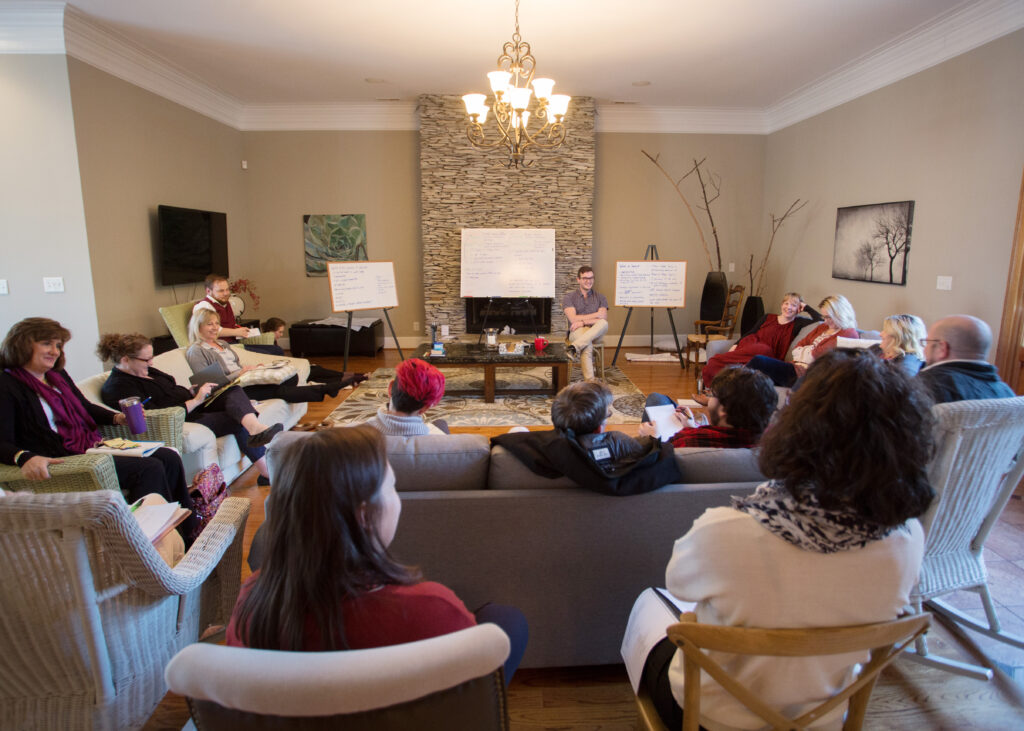
Apprentices will be assigned to a smaller cohort within the group and a mentor or coach who will meet with the small group 1-2 times per month to review their progress in their research and invention, arrangement, elocution, and editing, depending on where they are on the program and the development of their curriculum. Webinars meet twice a month on Wednesdays at 3:00-4:30pm ET.
The Curriculum Development Graduate Apprenticeship is for anyone who has graduated from the CiRCE Master Teacher Apprenticeship program who is now interested in developing curriculum for others to use, these may be teachers, homeschoolers, students, anyone!
Apprentices will have to travel to the two mandatory retreats each year. The retreat weeks are Aug 5-9, 2024 and Feb 12-15, 2025 both in Concord, NC, nearest airport is Charlotte, NC.
In total, you can expect to spend approximately 6-10 hours a week on the Apprenticeship; some people even say 4-7 hours is sufficient. The workload estimates depend on your research needs.
The Apprenticeship costs $3247/year in tuition, with a $400 administrative deposit due within thirty days of acceptance or April 1st for returning apprentices each year. In addition to the tuition and deposit, apprentices should expect to pay for travel, lodging, and food for the two retreats. A general estimated cost for each retreat is $500 plus airfare if applicable. Including all fees and expenses, the estimated cost for one year in the Apprenticeship is $4247.
An apprentice is a first-year participant. Second-year participants who have met all first-year requirements are referred to as journeymen. The costs, travel, and time commitments are the same for journeyman as they are for apprentices.These terms indicate progress in the program.
Apprentices receive an evaluation in December for the fall semester and in May for the spring semester. During evaluations, Head Mentors provide apprentices with valuable feedback and suggestions for improvement on the work they have done toward their curriculum.